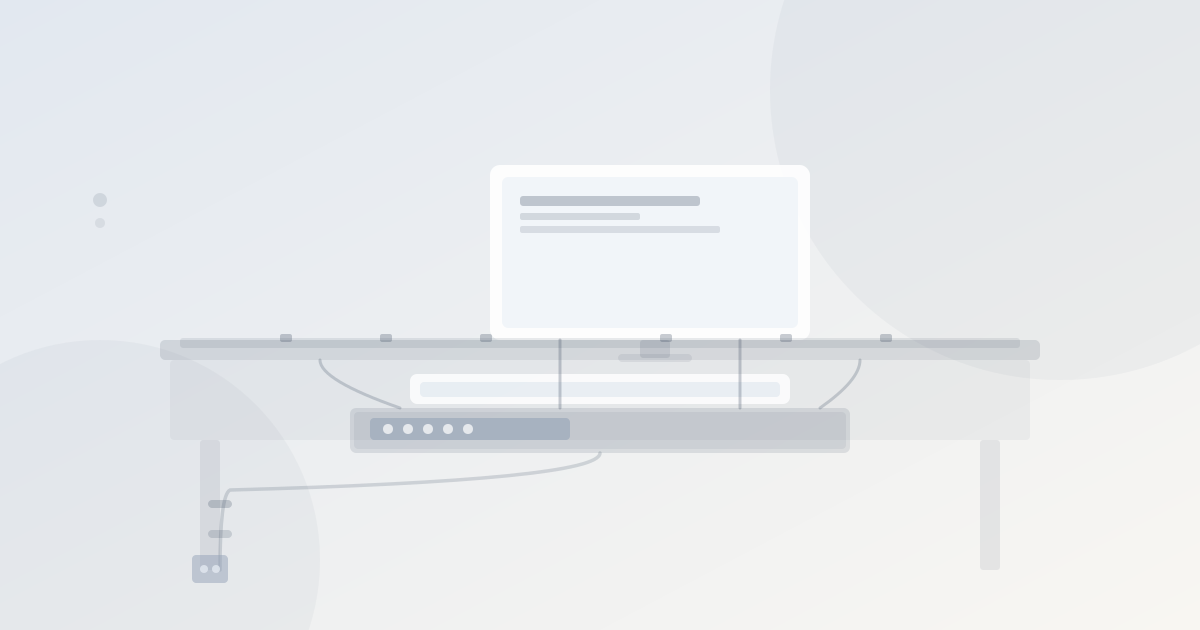
Home office storage works best in small spaces when it uses vertical space — walls — rather than floor space. The three most effective storage additions for any home office are wall shelves above the desk, an under-desk drawer unit, and a cable tray. Each one clears a different clutter zone without taking additional floor area.
The main types of home office storage
Home office storage options compared
| Storage type | What it stores | Footprint | Best position |
|---|---|---|---|
| Floating wall shelves | Books, files, small boxes, decorative items | Zero floor footprint | Above the desk — lowest shelf 30–40 cm above the monitor |
| Under-desk drawer unit | Paper, pens, chargers, small tools, notebooks | Fits under desk — check depth vs legroom | Under the desk, on the non-dominant hand side |
| Cable management tray | Power strip, excess cable length, USB hubs | Zero floor footprint — mounts under desk | Under the rear section of the desk surface |
| Pegboard panel | Headphones, cables, small tools, frequently used items | Zero floor footprint — wall-mounted | Behind or beside the desk |
| Desktop organizer tray | Pens, sticky notes, daily-use small items only | Small — on desk surface | Corner of desk, away from the keyboard |
| Filing cabinet | Documents, folders, reference files | Significant floor footprint | Beside desk if frequently accessed; separate room if not |
| Closed wall cabinet | Items that look untidy in open storage (chargers, batteries) | Zero floor footprint | Above desk or beside desk on the wall |
Wall shelves: the highest-value storage for home offices
Wall-mounted shelves are the most efficient storage in a home office because they use vertical space that would otherwise be empty. Two floating shelves above the desk give you substantial storage capacity without adding a single square centimetre of floor footprint.
Positioning: Install the lowest shelf so that you can reach items without standing — roughly 30–40 cm above the top of the monitor. If the shelf is too high, things get stored there and never retrieved. Install a second shelf above the first for items accessed weekly or less.
Depth: 20–25 cm depth is sufficient for books, box files, and small storage containers. Deeper shelves (30 cm) accommodate A4 lever arch files standing upright.
Weight capacity: A shelf holding books and files needs fixings rated for at least 15 kg. Use wall anchors appropriate for your wall type — plasterboard, brick, and concrete each need different fixings.
What to avoid: Open shelves that become a dumping ground for anything without a home. Assign a category to each shelf level before installing it — this determines what goes where from day one.
Under-desk drawer units: clearing the desk surface
An under-desk drawer unit (also called a pedestal) gives you drawer storage without a separate floor footprint, since it fits in the knee-hole space under the desk.
What to store in an under-desk drawer unit:
- Top drawer: daily use — pens, sticky notes, small scissors, a ruler
- Middle drawer: weekly use — paper, envelopes, stamps, printer cartridges
- Bottom drawer: monthly use — tech accessories, backup cables, documents in progress
Sizing — the critical check: Measure the under-desk height (floor to underside of the desk surface) before buying. Most desks are 72–76 cm high from the floor, with 65–70 cm of clearance under the surface. An under-desk unit under 65 cm fits in most setups. Check the depth too — units deeper than 40 cm often block knee clearance in a seated position.
Mobile vs fixed: Mobile units on castors are more flexible — they can be pulled out when you need access and pushed back under the desk. Fixed units are sturdier. For small home offices, mobile units are generally the better choice.
Pegboards: flexible visible storage
A pegboard panel mounted on the wall behind or beside the desk provides modular, rearrangeable storage. Hooks, small shelves, container holders, and cable clips all attach directly to the board and can be moved without new holes.
Best uses for a pegboard in a home office:
- Headphone hook
- Cable hooks for frequently moved charging cables
- Small container for scissors, markers, and tape
- Whiteboard or note clip for reference materials
- Small monitor or tablet arm mount
A pegboard is particularly useful in home offices where needs change — remote workers who occasionally need to reorganize for different tasks benefit from storage that adjusts without tools.
Desktop organizers: less is more
A desktop organizer should hold only the items you use multiple times per day. Everything else belongs in a drawer, on a shelf, or in a cable tray.
What belongs on the desk surface:
- Monitor and keyboard (obviously)
- One organizer tray: two to four pens, a notepad, sticky notes
- A mug or water bottle in a consistent position
- A desk lamp
What does not belong on the desk surface:
- Paper stacks
- Books not being referenced today
- Chargers and cables (cable tray or drawer)
- Spare equipment
- Decorative items beyond one or two small pieces
The rule of thumb: the desk surface should be 70% empty when you are not actively working. Anything that stays on the desk when you are not working is taking space it does not need to take.
Storage for specific items
Common home office items and where to store them
| Item | Where to store it | Why |
|---|---|---|
| Daily papers / notebook | Desktop organizer or desk surface in a defined spot | Accessed continuously throughout the day |
| Files and documents in progress | Under-desk drawer (middle) | Used weekly; close to hand but not on the surface |
| Archived documents / reference files | Wall shelf or filing cabinet | Accessed monthly or less — no need for prime desk storage |
| Cables and chargers | Under-desk cable tray (power strip) + drawer (spares) | Active cables in tray; spare cables in drawer |
| Printer paper | Under-desk drawer (bottom) or floor beside printer | Bulky; not needed until it runs out |
| Headphones | Pegboard hook or under-desk hook on desk edge | Needs to be accessible; off the desk surface |
| Tech accessories (USB drives, adapters) | Under-desk drawer (top) in a small tray divider | Small items that disappear if not contained |
| Books (reference only) | Wall shelf at reach height | Heavier items at lower shelf level; infrequently used at upper shelf |
Small-space storage: what to prioritize
In a home office under 4 square metres, the priority order for storage is:
- Install wall shelves first — gives the most capacity for the least cost and zero footprint
- Add a cable tray — removes cable clutter from floor and desk in one step
- Add an under-desk drawer unit — keeps paper and supplies off the desk surface
- Use a pegboard if the wall behind the desk is available
- Add a desktop organizer — one small tray only
Everything else is optional. Avoid filing cabinets in small offices unless documents are accessed daily — a filing cabinet in a small room consumes floor space for paper that is rarely needed.
Frequently asked questions
What is the best storage for a small home office?
Wall-mounted shelves above the desk, a compact under-desk drawer unit, and a cable management tray for the power strip and cables. These three additions give you significant storage capacity without adding floor footprint — which is the constraint that matters most in a small office.
How do I add storage to a home office without taking up floor space?
Use the walls. Floating shelves above the desk, a pegboard panel, and a wall-mounted cabinet give you storage without any floor footprint. Under-desk storage (drawers and cable trays) also adds capacity without floor use, since it occupies space that is already inside the desk's footprint.
Do I need a filing cabinet for a home office?
Only if you regularly access paper documents. Most remote workers use digital documents for day-to-day work. If paper files are needed weekly, an under-desk drawer unit handles most filing needs. A filing cabinet only makes sense if you have significant volumes of physical documents that need to be accessed regularly.
How do I keep a home office desk tidy?
Keep the desk surface to 30% occupied as a rule. Paper goes in a drawer or on a shelf; cables go in a tray; spare equipment goes in storage. Do a quick surface clear at the end of each work session — it takes 2 minutes and prevents gradual clutter accumulation.
What is the best under-desk storage for a home office?
A compact mobile drawer unit (pedestal) with two or three drawers. Check that it is under 40 cm deep and under 65 cm tall to fit under most standard desks without blocking knee clearance. Mobile units on castors are more flexible than fixed units — they can slide out when you need full access.